Sizing safety
How often does an ICL have to be swapped or removed because of sizing?
This is the exact fear you see in online forums, “what if the lens is the wrong size?” The team reviewed thousands of cases at a busy U.S. center and measured how often a lens actually had to be exchanged or removed for sizing. The honest answer: it is uncommon, and almost always preventable with better sizing up front, which is the whole reason tools like ICLFit.com exist.
Clinical Ophthalmology, A peer-reviewed, PubMed-indexed eye-surgery journal, meaning independent experts vetted the work before publication.
Matt Hirabayashi, MD, Gurpal Virdi, MD, Nasser T, Libfraind L, Zapata E, Abramson A, Parkhurst G. ICL Exchanges or Explants Due to Sizing in a United States High-Volume Center. Clinical Ophthalmology, July 2025.
DOI ↗ · PubMed ↗ · Full text (PMC) ↗
Lens accuracy
Does an EVO ICL’s real size actually match the size on the box?
Surgeons pick your lens assuming the labeled size is exact. This study physically checked how closely the manufactured EVO and EVO+ lenses match their stated sizes. Knowing the true dimensions lets a sizing tool like ICLFit.com account for tiny real-world differences instead of trusting the label blindly.
Cureus Journal of Medical Science, A peer-reviewed medical journal published by Springer Nature.
Matt Hirabayashi, MD, Gurpal Virdi, MD, Nasser T, Abramson A, Parkhurst G. Accuracy of Reported Sizes of the EVO/EVO+ Visian Implantable Collamer Lenses. Cureus, August 2025.
DOI ↗ · PubMed ↗ · Full text (PMC) ↗
Broader uses of phakic lenses
Could a lens like the ICL also help certain eye conditions?
A phakic lens is the same family of implant as the ICL. This study explored using one to help pigment dispersion syndrome, a condition where pigment rubs off the iris, hinting that these lenses may do more than correct vision. (Led by Dr. Hirabayashi.)
Cureus Journal of Medical Science, A peer-reviewed medical journal published by Springer Nature.
Matt Hirabayashi, MD, Cooley A, Shakarchi F, Vanrachack A, Ducker L, Shelby C, Coleman W, Parkhurst G, LoBue S. Phakic Intraocular Lenses as a Potential Treatment for Pigment Dispersion Syndrome. Cureus, February 2026.
DOI ↗ · PubMed ↗ · Full text (PMC) ↗
Shallow chamber (low ACD)
I was told my eye is “too shallow” (ACD under 3.0 mm). Can I still get an ICL?
Many patients are turned away because their anterior chamber depth is below the usual 3.0 mm cutoff. This study followed those exact patients and found ICL can work well in shallow eyes when sized carefully by an experienced team, the kind of difficult case precise sizing (the focus of ICLFit.com) is built for.
Clinical Ophthalmology, A peer-reviewed, PubMed-indexed eye-surgery journal, independent experts reviewed the work before publication.
Matt Hirabayashi, MD, Gurpal Virdi, MD, Abramson A, Nasser T, Vanrachack A, Parkhurst G. Clinical Outcomes of Implantable Collamer Lenses for Myopia in Eyes with Anterior Chamber Depth < 3.0 mm at a Single U.S. Center. Clinical Ophthalmology, 2025.
DOI ↗ · PubMed ↗ · Full text (PMC) ↗
How vault behaves
Does the lens “vault” change in the dark, and should I worry about night vision?
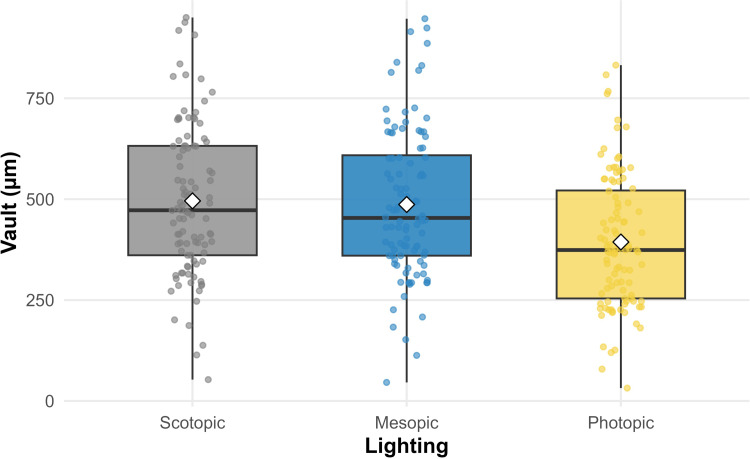
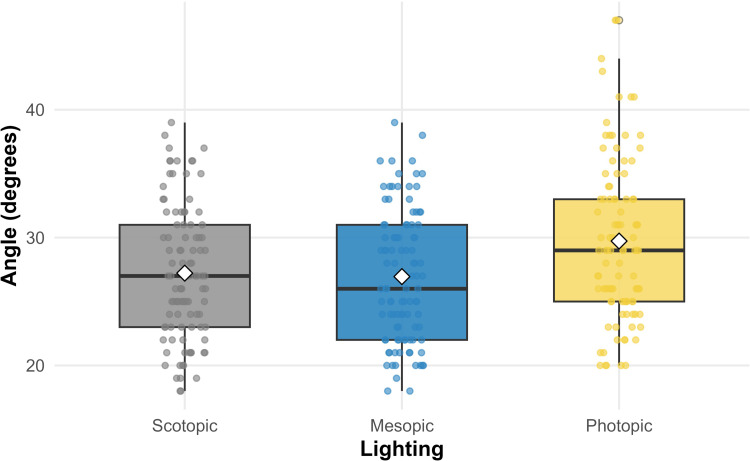
The small gap behind the lens (the vault) isn’t a single fixed number: this study showed it shifts as your pupil changes in bright vs. dim light. That’s reassuring, there’s no single “perfect” vault to chase, and it’s exactly why ICLFit.com predicts the vault for your specific eye rather than relying on one fixed target.
Clinical Ophthalmology, A peer-reviewed, PubMed-indexed eye-surgery journal.
Matt Hirabayashi, MD, Cantu E, Abramson A, Gurpal Virdi, MD, Nasser T, Parkhurst G. Dynamic Changes in Implantable Collamer Lens Vault and Anterior Chamber Angle Under Varying Lighting Conditions. Clinical Ophthalmology, April 2026.
DOI ↗ · PubMed ↗ · Full text (PMC) ↗
AI vault prediction★ Flagship journal
Can artificial intelligence predict the safe “gap” before surgery?
The “vault” is the tiny safe gap left behind the lens, too small or too big causes problems. This study built the first AI model that predicts that gap from an image, so the right size can be chosen before surgery rather than estimated. This AI is the engine behind ICLFit.com.
Journal of Cataract & Refractive Surgery, The flagship journal of the world’s cataract & refractive surgeons (official journal of ASCRS & ESCRS), among the most respected in the field.
Nasser T, Matt Hirabayashi, MD, Gurpal Virdi, MD, Abramson A, Parkhurst G. VAULT: A Novel Image-Based AI Model for Predicting Implantable Collamer Lens Postoperative Vault. Journal of Cataract & Refractive Surgery (JCRS), April 2024.
DOI ↗ · PubMed ↗
AI vault prediction★ Flagship journal
Predicting the safe gap from a quick, no-touch eye scan
The next-generation model: it predicts your vault from an OCT scan, a fast, painless, no-contact picture of the eye most clinics already own, instead of specialized ultrasound. The aim is fewer sizing-related lens swaps. This OCT-based AI powers the latest version of ICLFit.com.
Journal of Cataract & Refractive Surgery, The flagship journal of the world’s cataract & refractive surgeons (official journal of ASCRS & ESCRS).
Matt Hirabayashi, MD, Gurpal Virdi, MD, Nasser T, Abramson A, Parkhurst G. VAULT-OCT: Predicting ICL Postoperative Vault from Anterior-Segment OCT Using Deep Learning. Journal of Cataract & Refractive Surgery (JCRS), July 2025.
DOI ↗ · PubMed ↗
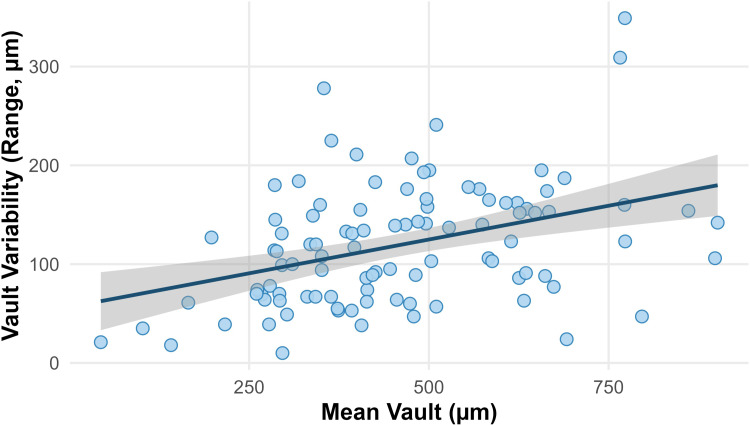
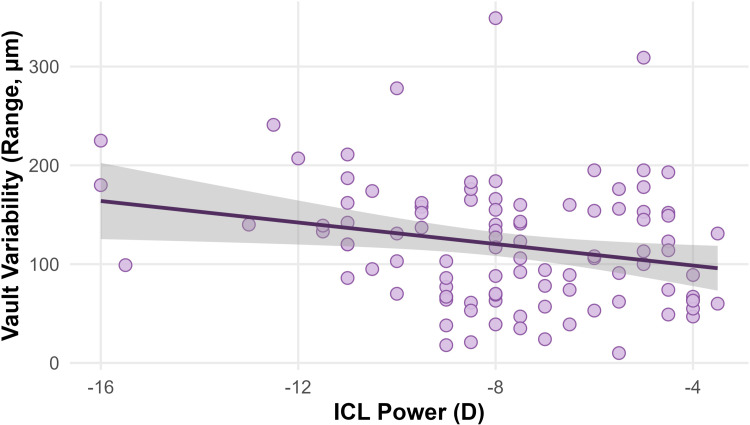
One of Dr. Virdi and Dr. Hirabayashi’s studies (Dynamic Changes in ICL Vault and Anterior Chamber Angle Under Varying Lighting Conditions, Clinical Ophthalmology, 2026) imaged 100 eyes after ICL surgery under dark, dim, and bright lighting. The takeaway for patients: vault is a living, moving range, not one perfect number to hit, which is why good sizing aims for the best fit for your individual eye. Here is the study’s own data, explained plainly.
Citations are provided for transparency and education. A publication is not medical advice or a guarantee of outcome; discuss your specific eyes with a qualified ophthalmologist.